



High sensitivity in childhood is not a problem. The real challenge often lies in not knowing how to support these children.
Many parents come to therapy feeling that their child “experiences everything too intensely.” They feel frustrated, overwhelmed, and question whether they are doing something wrong; however, sensitivity is not a flaw—it’s a trait that requires understanding and tools.
Below, I explain how to identify it and what to do on a daily basis for highly sensitive children, also known as children with high sensitivity, HSC, or hypersensitive children.
When feeling so much becomes a challenge for the child and the family
Highly sensitive children process information more deeply, which allows them to connect quickly with others, notice subtleties, or show great creativity.
But they can also become overwhelmed sooner, get frustrated easily, or need more time to recover.
The problem arises when emotional intensity becomes too much for them, causing them to react with crying, anger, avoidance, or even isolate themselves because they feel they “don’t fit in.”
The solution involves understanding how their inner world works and providing them with an environment where they feel safe being themselves.
Signs that help identify high sensitivity
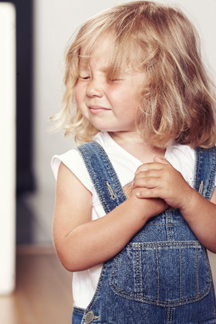
It’s important to remember that this is not a diagnosis, but a trait.
Some frequent signs that may help us include:
- They become distressed by loud noises, bright lights, changes, or unexpected events.
- They quickly perceive other people’s emotional states.
- They ask questions, analyze situations, and need explanations.
- They are more affected by criticism or conflict.
- They feel deeply moved by music, art, or small details.
Recognizing these signs is already a first step toward supporting them better.
Traits of highly sensitive children
In addition to these visible signs, children with high sensitivity often share a set of internal characteristics that explain why they experience the world so intensely. The most common include:
- Depth of processing: they reflect, analyze, and mentally review what they experience; they notice details other children often miss.
- Strong empathy and emotional awareness: they quickly identify how others feel and respond with care or concern.
- Intense response to sensory stimuli: strong smells, uncomfortable fabrics, noise, or crowds can affect them more than expected.
- Creativity and imaginative thinking: they often invent stories, games, and original solutions.
- Need for breaks and recovery: after social activities or intense stimulation, they may need more time to “come down.”
- Perfectionism or desire to do things “right”: not due to external pressure, but because they deeply feel when something doesn’t turn out as they imagined.
Understanding these traits helps interpret their behavior from a place of empathy rather than seeing it as “exaggerated” or “too much.”
When high sensitivity overlaps with other traits
It is not uncommon for high sensitivity to coexist with other developmental traits, and sometimes this causes confusion for families.
Some behaviors—such as avoiding noise, needing more time to adapt, or becoming overwhelmed by certain stimuli—may resemble those seen in autistic children or even in gifted profiles. However, although some behaviors may overlap, the underlying cause is not always the same.
In high sensitivity, there is usually emotional and sensory depth that makes the child process everything with greater intensity. In autism, there are broader differences in social communication and flexibility, and in giftedness there may be fast cognitive processing accompanied by strong internal sensitivity.
Sometimes these overlap, sometimes they don’t, but it’s important not to jump to conclusions.
When high sensitivity and giftedness overlap, a particularly complex profile may emerge: children who feel deeply and think very quickly. This may lead to a combination of perfectionism, difficulty managing frustration, and a sharp sense of injustice. They also tend to show high emotional intensity and a strong ethical sense, which means they need support both in regulating their emotions and in channeling their potential. These children may appear intellectually mature, but they still require emotional support tailored to their sensitivity, especially in highly sensitive gifted children.
The key is to observe calmly: how they regulate themselves, how they react to change, and what helps them feel safe. It is also important to offer a flexible environment that considers both realities when present: clear anticipations, quiet spaces, visual supports, and emotional guidance that respects their way of feeling. But above all, seek out a licensed psychologist specialized in this area if you wish to obtain a diagnostic assessment.
How to support them: practical day-to-day tools
- Create a predictable environment to reduce overwhelm
Sensitive children feel safer when they know what will happen.
Simple routines (the afternoon schedule, bath time, the way to say goodbye) help them lower emotional intensity.
For example, create a visual schedule with routines, using small, uncluttered images so they can anticipate what’s coming. - Validate their emotions without amplifying them
Saying “it’s not a big deal” or “don’t cry” doesn’t work. They feel more intensely and need to understand what’s happening to them.
For example, use short, clear phrases: “I see this bothered you,” “I understand it scares you,” “I’m here with you.” Validation acts as an emotional soothing tool. - Teach them to recognize their level of activation
Many sensitive children don’t notice they’re about to explode until it’s too late. Helping them recognize bodily cues is key for self-regulation.
For example, you can create a “volcano scale”:
• Level 1: calm
• Level 2: nervous
• Level 3: tense
• Level 4: about to explode
• Level 5: explosion
This helps them stop before reaching overwhelm. - Offer calming strategies they can use on their own
It’s not enough to say “breathe”; they need simple tools that truly work during intense moments. Some examples include:
• Breathing with an object (moving a feather or pom-pom up and down).
• A calm corner with minimal stimulation.
• Playing with playdough, kinetic sand, or warm water.
• Cards with pictures of calming actions.
It’s important to practice these also during calm moments. - Take care of their social environment and avoid labels
Many sensitive children feel “too intense” for others. If we start calling them “dramatic,” “shy,” or “oversensitive,” they internalize it.
For example, we can talk to the school to explain their needs and agree on small necessary adjustments: a break time, anticipatory cues, a quieter seat, or reduced sensory overload.
Turning sensitivity into strength
Sensitivity doesn’t disappear, but it can become a great strength when the child feels understood.
Supporting them doesn’t mean preventing them from suffering; it means teaching them to handle what they feel with tools, clear limits, and a respectful environment.
If parents, caregivers, and educators work along these lines, these children will have many more opportunities to make the most of their high sensitivity, helping them become happier and develop stronger self-esteem.

If you think your child might be highly sensitive and want personalized guidance, our center can help you understand their world and yours as a family.